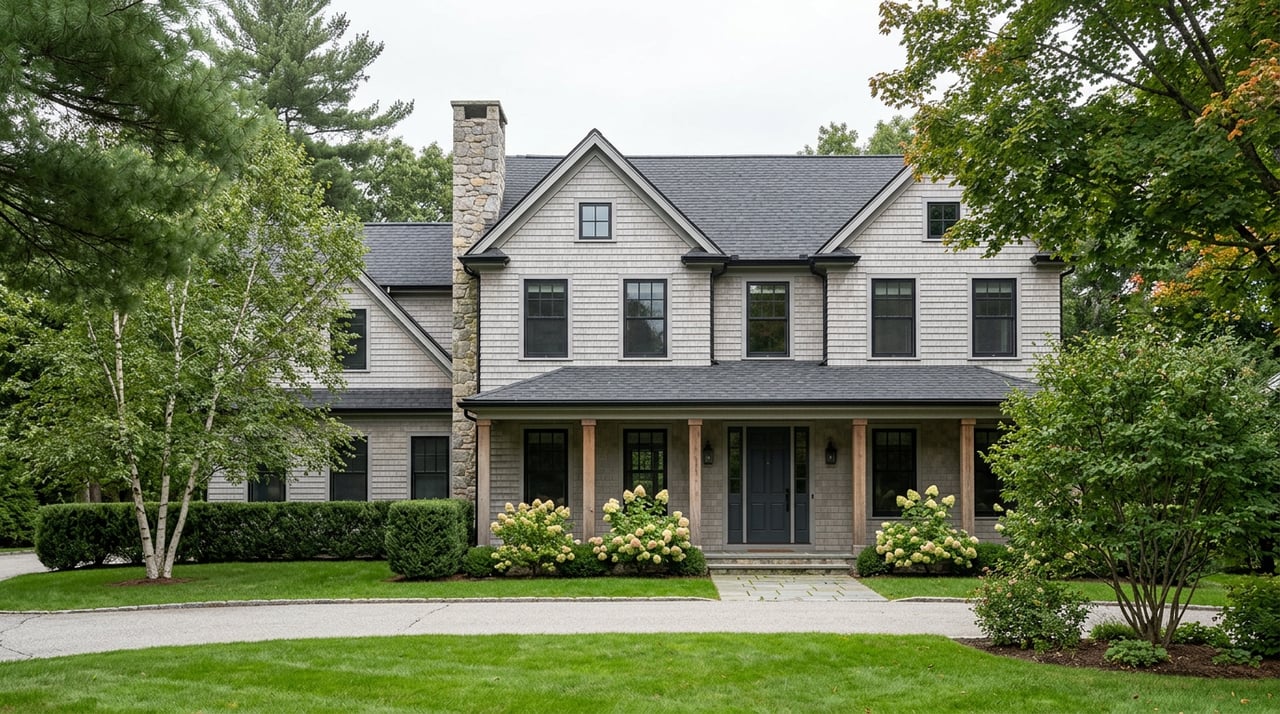
Elk Rapids Has Two Housing Markets, and the Median Price Only Shows You One
September 10, 2026
September 10, 2026
Pull two of the most-cited real estate data sources for Elk Rapids this year and you get numbers that shouldn't coexist. Zillow's automated valuation model puts the village's average home value near $505,000, up roughly 5.7% from a year earlier. Redfin's median sale price for the same village sits closer to $344,000, nearly identical to the median for all of Antrim County put together. Movoto's tracked median list price in April 2026 was $493,000. Three sources, three numbers, a spread of more than $160,000 depending on which one a buyer happens to click first.
None of these figures is wrong. They are measuring different things in a village small enough that the difference actually matters. Elk Rapids does not have one housing market with a single center of gravity. It has two: a compact village market within village limits, which cover just 1.65 square miles, and a broader market in Elk Rapids Township; the gap between them is why any single median you find online will mislead you about what your budget actually buys.
Here is what each number is really counting, alongside the county-wide figures for comparison:
| Measure | Elk Rapids | Antrim County overall |
|---|---|---|
| Zillow average home value, this spring | ~$505,454 (+5.7% year over year) | ~$347,542 (+2.8% year over year) |
| Redfin median sale price, this spring | ~$344,000 | ~$347,500 |
| Movoto median list price, April 2026 | ~$493,000 | not reported |
| Active Zillow listings, this spring | 11 | 181 |
Read those rows together and the contradiction resolves into a pattern. Elk Rapids' average value estimate runs about 45% above the county's, but its actual median sale price lands almost exactly on the county median. Meanwhile the village had roughly 6% as many homes on the market as the county as a whole. A handful of high-value transactions, likely waterfront or harbor-adjacent, are dragging the average upward without moving the sale-price median much, because there simply aren't enough transactions of any kind to smooth the curve. Thin markets do this. When only a few homes trade in a season, one $1.2 million bay-front closing can lift an average by tens of thousands of dollars while the sale-price median barely twitches, because the median only cares about the middle listing, not the outliers on either end.
That is the mechanism. Elk Rapids isn't expensive or affordable. It's split, with a thin, expensive slice at the top and a much larger, ordinary slice underneath it, and the published medians blend the two into a number that describes neither.
The reason this gap persists instead of correcting itself comes down to how little buildable land sits inside the walkable core. The Village of Elk Rapids zoning code allows residential lots as small as 7,260 square feet in its RM-L district and 9,600 square feet for single-family use in RM-H, dimensions that reflect a town platted for compact village living, not acreage. That small footprint is a feature for anyone who wants to walk to the harbor, but it also means the supply of new non-waterfront homes inside the village boundary is capped by geography, not by builder appetite. There is only so much of Elk Rapids that is actually Elk Rapids.
Everything outside those tight village lots falls into Elk Rapids Township, where lot requirements loosen considerably and waterfront parcels commonly stretch well past an acre. That's where the entry-level and mid-tier inland inventory lives, and it's also where a buyer will find real acreage on Elk Lake, Bass Lake, or the Grand Traverse Bay shoreline without paying a walkable-downtown premium on top of the water. The two zoning regimes sitting side by side, one compact and one spread out, are what keep the average and the median from ever converging. Waterfront parcels with bay views, Elk Lake frontage, or Chain of Lakes access routinely clear $600,000 and run into seven figures at the top end, while genuinely affordable inventory under $300,000 has become scarce enough that it barely shows up in the county-wide averages anymore.
None of this is an accident of geography. The village's harbor system, Lower and Upper Harbor slips, courtesy dockage, a four-lane launch onto Grand Traverse Bay, and a two-lane launch onto the Elk River, exists because the town built it that way on purpose, and it has been paying dividends for decades. The harbor carries a State of Michigan Harbor of Refuge designation and a Michigan Certified Clean Marina rating, with transient dockage available from May through October, plus a complimentary shuttle that gets boaters from the water to Main Street without needing a car. That infrastructure is the entire reason a home two blocks from the harbor commands a different price than a comparable home a mile inland in the township.
Worth separating out here: the municipal harbor system is not the same operation as the private Elk Rapids Marina on Elk Lake, a full-service marina at 118 Bridge Street with more than 100 seasonal slip rentals plus new and used boat sales, rentals, and repair service. Buyers doing diligence on dock access or slip waitlists should confirm which system a listing actually references, since the two are run separately and have different capacity and rules.
The civic investment behind all of it traces back to 1955, when Harbor Days began as a one-day fundraiser specifically to help pay for construction of the Elk Rapids harbor. More than seven decades later it's grown into a four-day festival with a Grande Parade and a Zambelli fireworks finale, still centered on the same waterfront it helped build. In 2026 the festival's dates moved a week later than usual, to August 5 through 8, after a scheduling dispute between the Elk Rapids Lions Club and its amusement vendor, Arnold's Amusements, pushed the traditional late-July slot back. The festival's roots are a reminder that the harbor premium buyers pay today isn't scenery. It's the return on a specific, decades-long municipal bet that paid off.
If you're pricing Elk Rapids against Torch Lake, West Bay, or another Northern Michigan lake town, the single most useful question isn't "what's the median here." It's which of the two Elk Rapids markets a given listing sits in. A home inside the village's compact zoning districts, within walking distance of River Street and the harbor, is competing in a genuinely thin, high-demand pool where inventory rarely sits long. A home in the township, even one with real water frontage on Elk Lake or Bass Lake, is competing in a larger, more typical market where acreage and privacy carry more weight than proximity to downtown.
Neither market is better. They serve different priorities, and conflating them under one median is how buyers end up either overpaying for a walkable lot they didn't need or underestimating what true harbor-adjacent living actually costs here. Knowing which market you're shopping in, before you fall in love with a number on a portal, is the difference between a smart offer and a surprised one at closing.
If you're weighing Elk Rapids against another Northern Michigan lake community, or trying to figure out which side of this split fits the way you actually want to live on the water, Angela DiLorenzo at Michigan LifeStyle Homes can walk you through current inventory on both sides of the village line. You can also browse what's currently listed in the area on the Elk Rapids homes for sale page. Request a Private Consultation to talk through what your specific budget actually buys here.
This article is general information, not legal, tax or financial advice. Consult a qualified professional about your situation.
Stay up to date on the latest real estate trends.


The most rewarding moments are when we have achieved your real estate goals.
ANGELA MIA DILORENZO
630 E Front St., Unit 200 Traverse City, MI 49686