Spider Lake Short Term Rental Potential: Rules and Returns
May 7, 2026
May 7, 2026
Thinking about buying on Spider Lake and offsetting costs with short-term rentals? That idea can be appealing, especially when you picture summer weekends on the water and guests willing to pay for that experience. But on Spider Lake, the real story is not just income potential. It is rules, seasonality, and whether the property fits your lifestyle goals as much as your spreadsheet. Let’s dive in.
If a Spider Lake property is in East Bay Township, short-term rental use is treated as a licensed activity, not a casual side option. Any owner renting for 30 consecutive nights or less must apply for a Short-Term Rental License unless the property is in the Regional Business district.
That detail matters because the township has a cap of 145 licenses, and according to the township FAQ, that cap has been met. At this time, there are no licenses available. For buyers, that means rental potential is not something you should assume. It needs to be verified early in your search.
Current license holders renew annually by November 1, and the annual fee is $450. Each license applies to only one dwelling unit, so you cannot treat one license as a blanket approval for multiple units on a property.
The township also requires supporting materials as part of the application process. These can include a floor plan, a site plan, a locally accessible responsible party within 45 miles, and a well and septic report if the property is not on public utilities.
Just as important, renting or advertising a short-term rental without a license is an ordinance violation. In practical terms, compliance is part of the value equation on Spider Lake. It is not a detail to sort out later.
East Bay Township’s application materials show that operating a short-term rental involves more than getting a license number. Owners also need to account for maximum occupancy, posted license and emergency contact information, and on-site parking for vehicles, boats, campers, and trailers.
The township’s good-neighbor guidance also makes clear that noise, fireworks, trash, and parking rules are enforceable. That matters on a lake where guest use can be active and seasonal. If you are evaluating a property, you are really evaluating whether it can function well as a compliant rental, not just whether it has attractive waterfront features.
Spider Lake has the kind of setting that naturally supports vacation demand. It is a 459-acre all-sport freshwater kettle lake with coves, sandbars, islands, and some no-wake areas, which helps explain why it appeals to boating, swimming, paddling, and summer family trips.
This is the kind of lake where the experience drives demand. Guests are not usually choosing Spider Lake for an urban stay. They are choosing it for water access, privacy, group time, and classic Northern Michigan recreation.
AirROI identifies East Bay Township as one of the top neighborhood areas for short-term rentals in the broader Traverse City market and notes its popularity for waterfront properties. It also reports that entire-home listings dominate the market, which lines up with what many buyers want here: a private, family-sized lake house rather than a room-share setup.
The strongest demand is concentrated in warmer months. A 2025 Michigan Realtors and Anderson Economic Group report using AirDNA data shows Grand Traverse County occupancy at about 25.3% in January, 50.1% in May, 65.7% in June, 79.8% in July, and 69.0% in August.
That pattern tells you a lot. Spider Lake can benefit from strong summer demand, but it does not behave like a flat year-round hotel market. You should expect meaningful swings between peak and off-peak periods.
AirROI adds more context, showing July as the peak revenue month and February as the softest stretch. It also reports an average booking lead time of about 54 days and an average stay length of about 4.7 nights, which supports the idea that this is a destination market built around planned getaways rather than constant weekly occupancy.
Public data for the Traverse City market points to solid gross revenue potential, but not a simple formula. AirROI reports an average nightly rate of about $310, average annual revenue around $40,358, occupancy at 44.6%, and RevPAR of $152.
AirDNA’s public Traverse City figures point in a similar direction, though the exact numbers differ. Its public page shows annual revenue of $36.6K, occupancy of 53%, ADR of $415.4, and RevPAR of $207.7.
Those differences are actually useful. They are a reminder that market-level dashboards use different samples and definitions. If you are underwriting a Spider Lake purchase, headline averages should be your starting point, not your decision.
Seasonality does not just affect occupancy. It also affects rates. AirROI’s seasonal breakdown shows peak-season nightly rates around $398, shoulder-season rates near $292, and low-season rates near $266.
Its strongest month reaches about $420 ADR, while the slowest month is around $244. That range is why it is important to model income conservatively. Summer can be strong, but it has to help carry slower stretches.
Cleaning fees also shape how the numbers feel in real life. AirROI reports that 92.2% of active Traverse City listings charge a cleaning fee, averaging $362. Gross revenue can look attractive on paper, but it is not the same as net cash flow once turnover and operating costs are considered.
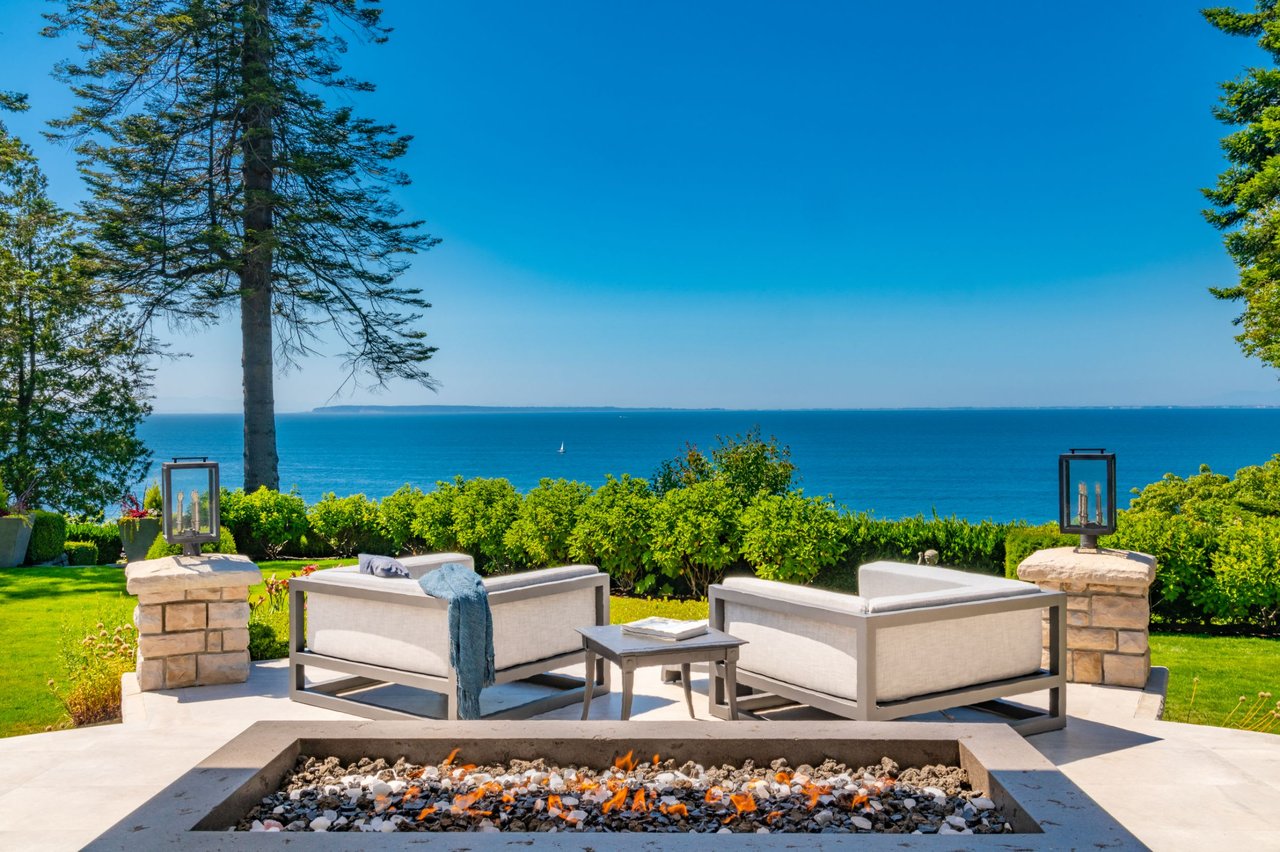
On Spider Lake, experience-based features appear to matter as much as the home itself. Public listings reviewed in the market tend to feature whole-home, waterfront inventory with docks, sandy frontage, kayaks, hot tubs, saunas, and group-friendly layouts.
That aligns with broader market data. AirROI flags boat slip as a high-opportunity amenity in the Traverse City market and shows much stronger revenue for listings that offer it than those that do not.
It also identifies kitchen, boat slip, and sauna as meaningful differentiators in revenue performance. The takeaway is straightforward: direct water access, strong outdoor amenities, and a setup that supports group stays tend to fit what guests are paying for.
That does not mean only lakefront properties have potential. But off-water homes usually need a different value story. Based on the market data, that may mean a lower purchase price, standout design, or a more durable four-season draw.
In other words, the closer your property aligns with the Spider Lake guest experience, the easier it may be to compete. If it does not offer direct frontage or dock access, your purchase basis and design choices matter even more.
For many buyers, Spider Lake makes the most sense as a lifestyle asset with seasonal income rather than a pure investment play. If your main goal is personal use with some income offset, the market can support that idea.
Demand is real, especially in summer, and many listings still leave room for owner-use blocks during the year. That can be attractive if you want a second home your family will actually enjoy, while also generating some revenue during high-demand periods.
But realism matters. The township license pool is capped, compliance requirements are specific, and property operations may include local management, septic or well documentation, occupancy limits, and turnover logistics.
Michigan also imposes a 6% use tax on lodging furnished as a commercial accommodation. That is one more reason to approach the numbers carefully and with a full picture of operational requirements.
A strong Spider Lake plan usually starts with disciplined assumptions, not best-case projections. The most realistic model is summer-heavy bookings, slower spring and winter cash flow, owner-use time, and ongoing operating expenses.
As you evaluate a property, focus on a few core questions:
That last question is often the most important one. On Spider Lake, the best purchases are usually the ones that work for your life first and your income goals second.
If you are considering a Spider Lake purchase, the smartest move is to evaluate it through both lenses at once: lifestyle value and operational realism. That balance can help you avoid overpaying for projected income and focus instead on a property that fits how this market actually works.
When you want experienced guidance on waterfront and lifestyle property decisions in Northern Michigan, connect with Angela Mia DiLorenzo.
Stay up to date on the latest real estate trends.




The most rewarding moments are when we have achieved your real estate goals.
ANGELA MIA DILORENZO
630 E Front St., Unit 200 Traverse City, MI 49686