What Living in Leland Michigan Feels Like by the Water
July 9, 2026
July 9, 2026
Wondering what it’s really like to live in Leland? If you are drawn to Northern Michigan for water, history, and a slower pace, Leland stands out in a way few places do. From the preserved fishing shanties of Fishtown to quiet lakefront cottages and bluffside retreats, this village offers a lifestyle shaped by shoreline, seasonality, and scarcity. Let’s dive in.
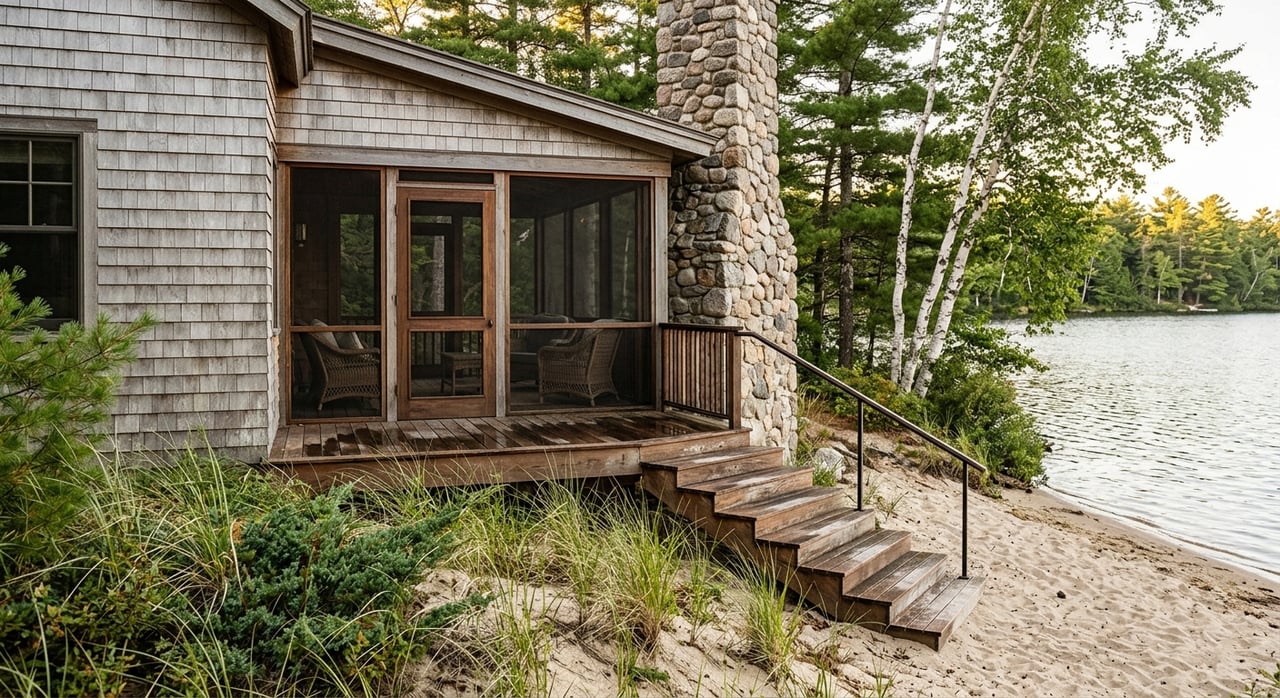
Leland sits on a narrow strip of land between Lake Michigan and Lake Leelanau, which gives the village a true water-centered identity. According to the township plan, the area includes about 12 miles of Lake Michigan shoreline and 17 miles of Lake Leelanau shoreline, along with rolling hills, wooded land, and high bluffs.
That geography shapes daily life in a big way. The nearby lakes help moderate the climate, making Leland about 10 degrees cooler in summer and warmer in winter than inland areas. If you like four-season living without some of the sharper temperature swings, that can be a meaningful advantage.
Leland is also close enough to stay connected while still feeling tucked away. The township plan places it about 25 miles from Traverse City, with M-22 and M-204 serving as the main road framework. For many buyers, that balance is part of the appeal.
Fishtown is not just a scenic backdrop. It is a preserved historic working waterfront along the Leland River, made up of weathered fishing shanties, smokehouses, overhanging docks, fish tugs, and charter boats. The village describes it as one of the last working and thriving fishing districts on the Great Lakes.
That matters because it gives Leland a sense of place that feels real rather than manufactured. The district is preserved and managed by the Fishtown Preservation Society, and it also has formal historic recognition through National Register documentation. When you spend time here, you feel the link between past and present.
For buyers, this historic waterfront does more than add charm. It supports the kind of everyday environment that makes Leland memorable, especially if you want a home in a village where water and local history are still central to daily life.
One of Leland’s biggest draws is its compact, walkable village core. The harbor next to Fishtown is village-owned and includes a public boat launch and marina slips, while downtown offers a mix of independent shops, artists, and local wineries anchored by Historic Fishtown.
If you value the ability to park the car and spend the day on foot, Leland delivers that better than many resort-oriented markets. You can move from the harbor to shops, then out to public shoreline access, all within a small footprint.
Public access is a major part of the local lifestyle. Van’s Beach begins from Cedar Street downtown, and other recreation areas include North Beach, Bartholomew Park on North Lake Leelanau, Schneider Beach, Whaleback Natural Area, and Clay Cliffs.
In Leland, the water is not just something you look at. It often becomes part of how you spend your time. Boating and fishing are tied closely to the village identity, and the harbor serves as a harbor of refuge with launch access, slips, and charter activity.
The Manitou Island Transit also runs from Leland to North and South Manitou Islands in Sleeping Bear Dunes National Lakeshore. That makes the village a practical jumping-off point for day trips and short excursions on the water.
This kind of access helps explain why Leland appeals to second-home buyers, retirees, and lifestyle relocators. If your ideal day includes beach time, a marina, a boat ride, or simply being close to open water, Leland checks a lot of boxes.
Leland Township housing is largely residential, with most single-family homes in Leland and Lake Leelanau and along the shores of Lake Leelanau and Lake Michigan. The township plan also notes that seasonal housing made up 45.1% of the housing stock in the 2010 census.
That seasonal pattern helps explain the local housing mix. In practical terms, you will often find in-village homes close to the harbor, seasonal cottages and smaller lake homes along the shoreline, and occasional larger-lot or bluffside retreats.
Some properties are designed for simple summer use, while others function as full-time residences or luxury second homes. You may also see retirement homes, rental homes, cottages, lodges, and bed-and-breakfast-style properties as part of the broader local housing and tourism ecosystem.
Leland sits in a very different price tier than much of the surrounding region. Zillow’s current Leland home value was reported at $1,193,066 as of May 31, 2026, while Leelanau County’s median owner-occupied home value was $458,400.
Nearby values give more context. Zillow reported Lake Leelanau at $900,911, Suttons Bay at $637,751, Glen Arbor at $654,633, and Traverse City at $446,500. Taken together, those figures point to Leland as an upper-tier market.
Inventory is also tight. Zillow showed only 5 homes for sale and 3 new listings at that time, which supports the idea that buyers often face limited choice. If you are waiting for the perfect property in Leland, patience and preparation both matter.
Leland is especially well suited for buyers looking for a lifestyle property rather than a standard suburban setup. Seasonal second-home owners are a major part of the market, and the township plan states that summer population is driven by seasonal second-home owners and tourists.
Retirees are another natural fit. Leelanau County’s 2025 population estimate was 22,982, and 36.6% of residents were age 65 or older. The township plan also describes Leland Township as a retirement destination.
Lifestyle relocators may also find a strong fit here, especially if they value a compact village core, public recreation access, and a quieter rhythm outside the busiest summer months. This is less about suburban amenities and more about daily access to shoreline, boating, beaches, and a distinctive village setting.
Before you buy in Leland, it helps to understand how much the seasons shape the experience. The township plan notes that the summer population is inflated by seasonal second-home owners and tourists, and that Leelanau County has one of the highest seasonal population shares in Northwest Michigan.
That means Leland tends to feel busier in peak summer and quieter during the shoulder seasons and winter. For some buyers, that contrast is exactly the point. You get the energy of a popular harbor village in summer and a calmer retreat for much of the rest of the year.
If you are considering a second home, this rhythm may feel ideal. If you are planning a full-time move, it is worth thinking through how you want the village to feel in February as well as July.
Lakefront property in Leland can be exceptional, but shoreline purchases call for careful due diligence. The township plan notes state-designated critical dune areas and high-risk erosion areas along parts of the Lake Michigan shoreline.
That does not mean lakefront ownership is off the table. It means you should approach it with a clear understanding of the site, the shoreline conditions, and any property-specific constraints tied to location.
This is where local guidance becomes especially valuable. When you are buying a lifestyle property, details like shoreline geography, access, and long-term usability can matter just as much as square footage or finishes.
Leland offers a rare mix of preserved character, water access, and limited inventory. You are not just buying into a map point. You are buying into a small Northern Michigan village where the waterfront still works, the public shoreline is part of everyday life, and the housing stock is closely tied to the landscape.
That combination is hard to replicate. For some buyers, the draw is Fishtown and the harbor. For others, it is the possibility of a cottage near the lake, a retreat on a bluff, or a home base that feels both private and connected.
If Leland matches the life you want to build, it is a market worth approaching with clarity and strategy. And if you want experienced guidance on waterfront, second-home, and lifestyle property opportunities in Northern Michigan, Angela Mia DiLorenzo can help you navigate the search with local insight and personalized care.
Stay up to date on the latest real estate trends.


The most rewarding moments are when we have achieved your real estate goals.
ANGELA MIA DILORENZO
630 E Front St., Unit 200 Traverse City, MI 49686